Advanced MEAN Engineering Program

  • Master mongodb, express.js, angular, and node.js in one streamlined roadmap
  • Build api-driven web applications with structured frontend-backend integration
  • Develop production-ready projects using modern javascript technologies
6 Months ₹45,999 ₹35,999

Join 210+ students who have already benefited from this course.
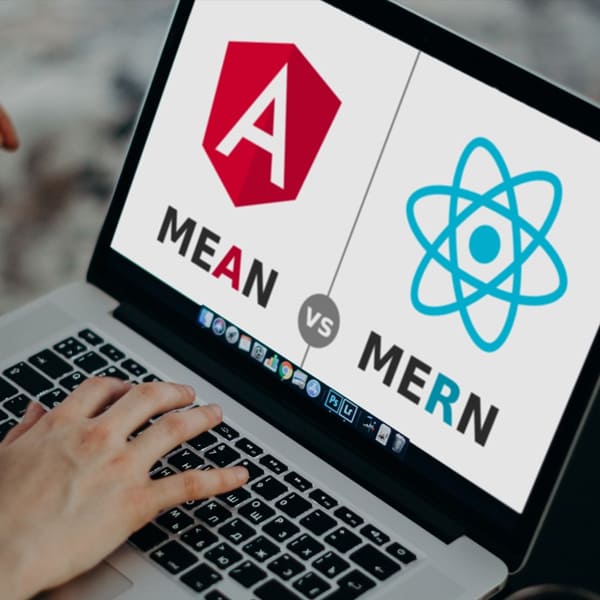
Advanced MEAN Engineering Program
Limited Seats Available

Upgrade Your Skills
With Industry Ready Courses

Enroll Now

Fast onboarding • Secure • AI-powered experience
Enrollment submitted successfully.

Enrollment Successful 🎉


Course Overview

The MEAN Stack is one of the most efficient and scalable technologies for building modern web applications. Combining MongoDB, Express.js, Angular, and Node.js, it enables developers to create fast, dynamic, and fully integrated full-stack solutions using JavaScript across the entire application. This program is crafted for learners who want to become highly capable full-stack developers by mastering frontend interfaces, backend logic, APIs, and database systems within a unified ecosystem. You’ll gain practical experience in developing REST APIs, managing application data, creating dynamic Angular interfaces, and connecting complete frontend-backend workflows. Through structured learning and real-world implementation, this course prepares you to build scalable applications used in startups, SaaS products, enterprise systems, and modern web platforms. If you want to become a developer who can architect and build complete web systems—MEAN Stack is your launchpad.

Course with Live Project

No Refund Available

Master the complete mean stack development workflow

Build scalable frontend-backend applications using javascript

Learn angular for dynamic ui development

Create restful apis using node.js and express.js

Manage application data efficiently with mongodb & mongoose

Develop portfolio-ready crud applications with modular architecture

Course Content

  • Understanding mean stack architecture
  • Overview of mongodb express angular and node js
  • Setting up development environment
  • Understanding full stack development workflow
  • Exploring project structure
  • Understanding client server architecture
  • Introduction to restful applications
  • Understanding development lifecycle
  • Installing development tools
  • Introduction to software engineering concepts
  • Industry workflow basics

  • Understanding nosql database concepts
  • Installing and configuring mongodb
  • Creating databases and collections
  • Performing crud operations
  • Working with mongodb compass
  • Data modeling basics
  • Understanding bson documents
  • Collection relationships
  • Mongodb best practices
  • Managing database structure
  • Understanding database performance

  • Working with documents and collections
  • Query operators and filtering
  • Sorting and pagination
  • Aggregation framework basics
  • Mongodb atlas introduction
  • Indexing concepts
  • Optimizing database queries
  • Schema validation basics
  • Backup and restore techniques
  • Database security basics
  • Advanced aggregation operations

  • Understanding node js runtime
  • Installing node js and npm
  • Working with modules
  • Creating basic node js applications
  • File system operations
  • Event driven architecture basics
  • Working with package management
  • Environment variables basics
  • Understanding non blocking operations
  • Node js project structure
  • Managing development workflow

  • Introduction to express js
  • Creating routes and apis
  • Handling request and response
  • Middleware basics
  • Route parameters and query strings
  • Express application structure
  • Error handling basics
  • Rest api best practices
  • Organizing backend code
  • Creating reusable middleware
  • Backend architecture basics

  • Building restful apis
  • Connecting mongodb with node js
  • Performing crud operations through apis
  • Testing apis using postman
  • Structuring backend applications
  • Api validation techniques
  • Organizing controllers and routes
  • Response formatting standards
  • Api documentation basics
  • Managing api security
  • Scalable api development concepts

  • Understanding authentication concepts
  • Implementing user registration and login
  • Password hashing basics
  • Jwt authentication
  • Securing api routes
  • Authentication middleware
  • Handling authorization errors
  • Managing user sessions
  • Security best practices
  • Role based access control
  • Protecting sensitive data

  • Environment variables management
  • File upload basics
  • Email integration basics
  • Pagination in apis
  • Search and filtering features
  • Logging and error management
  • Backend best practices
  • Role based access concepts
  • Optimizing backend performance
  • Managing large scale apis
  • Backend scalability concepts

  • Understanding angular framework
  • Setting up angular environment
  • Creating angular application
  • Understanding angular project structure
  • Angular cli basics
  • Typescript basics for angular
  • Understanding angular modules
  • Angular development workflow
  • Angular best practices
  • Building modular applications
  • Understanding spa architecture

  • Creating angular components
  • Understanding data binding
  • Using directives in angular
  • Component communication basics
  • Working with pipes
  • Event binding techniques
  • Reusable component structure
  • Dynamic data rendering
  • Organizing angular components
  • Building interactive interfaces
  • Component optimization techniques

  • Creating template driven forms
  • Reactive forms basics
  • Form validation techniques
  • Configuring angular routing
  • Navigation between components
  • Route guards basics
  • Dynamic routing concepts
  • Form error handling
  • Nested routing basics
  • Securing angular routes
  • Optimizing navigation flow

  • Understanding angular services
  • Dependency injection basics
  • Connecting angular with rest apis
  • Handling http requests
  • Managing dynamic data in application
  • Crud operations in angular
  • Error handling in api calls
  • Reusable service architecture
  • Api integration best practices
  • Managing api state
  • Optimizing frontend communication

  • Sharing data between components
  • Introduction to rxjs
  • Observables basics
  • Subjects and behavior subjects
  • Angular lifecycle hooks
  • Lazy loading basics
  • State management concepts
  • Managing async data
  • Improving application performance
  • Understanding reactive programming
  • Structuring scalable state logic

  • Connecting angular frontend with backend apis
  • Managing authentication flow
  • Handling api responses
  • Dynamic data rendering
  • Error handling techniques
  • Protected frontend routes
  • Full stack data flow
  • Managing user sessions
  • Real world integration practices
  • Integrating third party apis
  • Managing shared application data

  • Organizing full stack applications
  • Creating reusable components
  • Managing backend structure
  • Environment configuration
  • Application optimization techniques
  • Debugging full stack applications
  • Industry best practices
  • Structuring scalable applications
  • Managing project workflow
  • Clean code architecture concepts
  • Large scale project planning

  • Testing backend apis
  • Debugging angular applications
  • Handling runtime errors
  • Using browser developer tools
  • Writing maintainable code
  • Improving code quality
  • Logging techniques
  • Understanding testing workflow
  • Best practices for debugging
  • Performance monitoring basics
  • Application stability techniques

  • File upload integration
  • Search and pagination features
  • Real time data basics
  • Advanced authentication concepts
  • Optimizing database queries
  • Api security techniques
  • Performance optimization basics
  • Working with third party apis
  • Application scalability concepts
  • Caching concepts managing high traffic applications

  • Introduction to deployment workflow
  • Hosting backend applications
  • Deploying angular applications
  • Managing environment configurations
  • Understanding ci cd basics
  • Domain and hosting concepts
  • Deployment security basics
  • Monitoring application health
  • Version control workflow
  • Production best practices
  • Managing application updates

  • Planning full stack application
  • Building frontend and backend features
  • Integrating database with application
  • Applying authentication features
  • Testing and debugging project
  • Optimizing application performance
  • Implementing scalable architecture
  • Managing deployment workflow
  • Documentation and presentation
  • Team collaboration workflow
  • Industry level development practices

Skills Developed with MEAN Course

Angular Development: Build responsive and dynamic user interfaces using angular.
Node.js Development: Create scalable server-side applications and backend services.
Express.js Framework: Develop restful apis and manage application routing efficiently.
Mongodb Database: Store, manage, and retrieve application data using mongodb.
Api Development: Design and integrate apis for seamless frontend-backend communication.
Authentication & Security: Implement secure login systems using jwt and bcrypt.
Full-stack Integration: Connect frontend, backend, and database components effectively.
Deployment Techniques: Deploy and manage web applications in production environments.
Project Development: Build complete web applications from planning to deployment.
Soft Skills: Strengthen problem-solving, teamwork, communication, and analytical thinking abilities.

Career Opportunities After MEAN Course

This course opens doors to multiple high-demand career paths across industries.

Mean Stack Developer:

Build and maintain complete web applications using the mean technology stack.

Full Stack Developer:

Develop frontend interfaces, backend services, and database solutions.

Backend Developer:

Create apis, business logic, and server-side applications using node.js.

Angular Developer:

Develop modern and responsive frontend applications using angular.

Web Application Developer:

Design and maintain scalable web-based software solutions.

Why Enroll in MEAN with Solitaire Learning?

Comprehensive Full-stack Training: Learn frontend, backend, database, and deployment concepts in one program.
Hands-on Projects: Build real-world applications that strengthen your portfolio and practical skills.
Industry-relevant Curriculum: Master mongodb, express.js, angular, node.js, and modern development practices.
Practical Development Experience: Gain confidence through assignments, coding exercises, and project work.
Career-focused Training: Develop job-ready full-stack skills aligned with industry requirements.
Frequently Asked Questions

Have Questions About This Course?

Find answers to the most common questions learners ask before enrolling.

No. Beginners can start with the foundational courses and gradually learn full-stack development concepts.

Basic JavaScript knowledge is highly recommended because all MEAN Stack technologies use JavaScript.

No. Angular fundamentals are taught as part of the course curriculum.

Yes. Students, graduates, job seekers, and working professionals from any background can join and learn full-stack development.

You will need a computer, Node.js, MongoDB, Angular CLI, a modern web browser, and a code editor such as Visual Studio Code to start developing MEAN Stack applications.

MEAN Stack is a full-stack web development technology stack consisting of MongoDB, Express.js, Angular, and Node.js. It enables developers to build complete web applications using JavaScript.

You will learn frontend development with Angular, backend development with Node.js and Express.js, database management with MongoDB, API development, authentication, and deployment.

MEAN Stack uses JavaScript throughout the entire application, making development faster, more efficient, and easier to maintain.

Yes. The course covers client-side development using Angular and server-side development using Node.js, Express.js, and MongoDB.

MongoDB is a NoSQL database that stores data in flexible JSON-like documents, making it suitable for modern web applications.

Express.js is a backend framework for Node.js that simplifies routing, API development, middleware integration, and server management.

Yes. You will learn how to create, test, secure, and integrate RESTful APIs with frontend applications.

Yes. Advanced courses cover JWT authentication, role-based access control, user registration, login systems, and security best practices.

Yes. Each course duration includes practical projects that combine Angular, Node.js, Express.js, and MongoDB.

The 6-month course covers advanced full-stack development, scalable architecture, authentication systems, real-time applications, deployment, and enterprise-level projects.
Course FAQ

Ready to Take the Next Step in Your Career?

Join our expert-led training program, gain industry-recognized skills, and move closer to your professional goals. Seats are limited — enroll today!

Recommended Courses for You