MERN Stack Applied Expertise

  • High Demand & Career Stability: Full-stack developers are highly sought after in startups, mncs, and product-based companies.
  • Master One Language For Full Development: Use javascript across frontend, backend, and database interactions, making development faster and more efficient.
  • Real Industry Exposure: Understand how production-level applications are developed, optimized, and maintained in real-world scenarios.
6 Months ₹45,999 ₹35,999

Join 195+ students who have already benefited from this course.
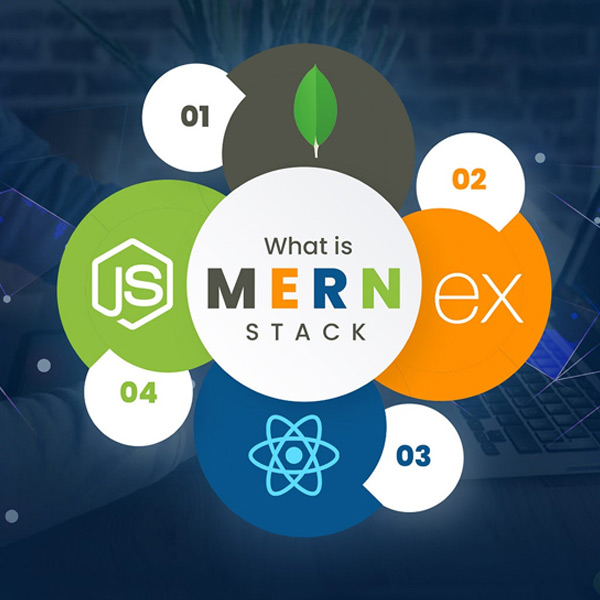
MERN Stack Applied Expertise
Limited Seats Available

Upgrade Your Skills
With Industry Ready Courses

Enroll Now

Fast onboarding • Secure • AI-powered experience
Enrollment submitted successfully.

Enrollment Successful 🎉


Course Overview

If you want to become a full stack developer, you don’t just need theory — you need hands-on experience building real applications. This MERN Stack Mastery Program is designed to help you learn by doing. You will work with MongoDB, Express.js, React.js, and Node.js to build complete web applications from the ground up. Throughout this training, you will not just follow tutorials, you will create, test, debug, and deploy projects just like in a real development environment. By the end, you will have the skills, confidence, and portfolio needed to step into the industry.

Course with Live Project

No Refund Available

Advanced Full-stack Development Training: Master The Complete Development Process From Ui Design To Backend Logic And Database Management With A Deeper Understanding Of Each Layer.

Industry-level Tools & Practices: Work With Professional Tools Like Git, Apis, And Cloud Deployment Platforms While Following Industry-standard Coding Practices.

Extensive Project-based Learning: Build Multiple Real-world Projects Such As Authentication Systems, Dashboards, E-commerce Applications, And Full-stack Platforms.

Course Content

  • Overview of web technologies
  • Frontend vs backend vs full stack
  • Introduction to mern stack architecture
  • Role of javascript in full stack development
  • Understanding client-server model
  • Development tools overview
  • Version control basics
  • Software development lifecycle
  • Setting up development environment

  • Html5 document structure
  • Semantic elements for seo
  • Forms & input types
  • Tables & lists
  • Multimedia integration
  • Accessibility standards
  • Meta tags & seo basics
  • Page optimization techniques
  • Cross-browser compatibility
  • Building structured web pages

  • Css syntax & selectors
  • Box model & spacing
  • Colors & typography
  • Background styling
  • Display properties
  • Responsive units
  • Css variables
  • Layout basics
  • Styling best practices
  • Creating styled pages

  • Flexbox layout system
  • Css grid system
  • Media queries
  • Mobile-first design
  • Responsive images
  • Ui layout techniques
  • Design consistency
  • Cross-device compatibility
  • Css optimization
  • Real layout implementation

  • Introduction to ui/ux
  • User-centered design
  • Wireframing concepts
  • Design thinking process
  • Typography in ui
  • Color psychology
  • Usability principles
  • Interaction design
  • Accessibility in design
  • Creating user-friendly interfaces

  • Introduction to figma interface
  • Wireframe design in figma
  • Prototyping features
  • Components & design systems
  • Canva for ui design
  • Social & web graphics
  • Design collaboration
  • Exporting assets
  • Design handoff
  • Real ui design practice

  • Bootstrap grid system
  • Responsive components
  • Navbar & forms
  • Cards & ui elements
  • Utility classes
  • Custom styling
  • Introduction to tailwind css
  • Rapid ui development
  • Template design
  • Ui optimization

  • Variables & data types
  • Operators & expressions
  • Functions & scope
  • Events & event handling
  • Dom manipulation
  • Conditional statements
  • Loops & iterations
  • Form validation
  • Debugging basics
  • Interactive ui creation

  • Arrow functions
  • Destructuring
  • Spread & rest operators
  • Promises & async/await
  • Api handling
  • Json data handling
  • Closures & callbacks
  • Modules & imports
  • Error handling
  • Performance optimization

  • Version control concepts
  • Git commands
  • Repository management
  • Branching & merging
  • Pull requests
  • Collaboration workflow
  • Conflict resolution
  • Github projects
  • Code management
  • Deployment basics

  • React fundamentals
  • Jsx syntax
  • Components structure
  • Props usage
  • State management basics
  • Event handling
  • Conditional rendering
  • Lists & keys
  • Project setup
  • First react application

  • React hooks
  • Usestate & useeffect
  • Usecontext api
  • React router
  • Form handling
  • Api integration
  • Custom hooks
  • Code splitting
  • Performance optimization
  • Scalable applications

  • Global state management
  • Context api deep dive
  • Introduction to redux
  • Reducers & actions
  • Middleware concepts
  • Data flow architecture
  • Debugging state issues
  • Performance handling
  • Modular code structure
  • Real use cases

  • Node.js architecture
  • Npm & packages
  • Creating server
  • File system module
  • Event loop concept
  • Middleware basics
  • Environment variables
  • Debugging node apps
  • Backend setup
  • Api basics

  • Express setup
  • Routing system
  • Middleware functions
  • Request & response handling
  • Rest api development
  • Error handling
  • Authentication basics
  • Mvc pattern
  • Security practices
  • Api optimization

  • Nosql database concepts
  • Mongodb setup
  • Crud operations
  • Schema design
  • Mongoose integration
  • Data modeling
  • Relationships
  • Indexing
  • Data validation
  • Performance optimization

  • User authentication basics
  • Jwt implementation
  • Password encryption
  • Role-based access
  • Session management
  • Api security
  • Data protection
  • Secure coding practices
  • Preventing attacks
  • Security testing

  • Connecting frontend & backend
  • Api communication
  • Crud operations
  • Authentication integration
  • State synchronization
  • Error handling
  • Data flow management
  • Debugging full apps
  • Scalable architecture
  • Real project integration

  • Rest api design
  • Crud apis
  • Api testing tools
  • Third-party apis
  • Data fetching
  • Api security
  • Documentation
  • Performance optimization
  • Error handling
  • Real api projects

  • Github deployment
  • Netlify & vercel
  • Backend hosting
  • Database hosting
  • Domain setup
  • Ci/cd introduction
  • Environment configuration
  • Performance optimization
  • Seo techniques
  • Live project deployment

  • Unit testing basics
  • Debugging tools
  • Error tracking
  • Performance testing
  • Code quality
  • Security testing
  • Bug fixing
  • Logging systems
  • Optimization techniques
  • Production readiness

  • E-commerce application
  • Portfolio website
  • Blog platform
  • Dashboard ui
  • Authentication system
  • Api-based projects
  • Responsive applications
  • Ui/ux focused projects
  • Debugging projects
  • Industry-level development

  • Vehicle rental system
  • Medical appointment system
  • Online learning platform

Skills Developed in This Course

Frontend Development: Build modern, responsive interfaces using html, css, javascript, and react.
React.js Concepts: Work with components, hooks, routing, and advanced state management.
Backend Development: Develop scalable server-side applications using node.js and express.js.
Database Management: Handle complex data operations using mongodb.
Api Development: Design, build, and integrate restful apis.
Authentication & Security: Implement secure login systems, authorization, and data protection.
Version Control: Use git and github for collaboration and project management.
Deployment Skills: Deploy applications using modern cloud and hosting platforms.
Project Development: Build complete industry-level applications from scratch.
Debugging & Optimization: Improve performance, fix bugs, and optimize applications.

Career Opportunities After MERN Stack

This course opens doors to multiple high-demand career paths across industries.

Full Stack Developer:

Work on complete application development.

React Developer:

Build dynamic and modern user interfaces.

Node.js Developer:

Handle backend systems, apis, and database logic.

Web Application Developer:

Develop scalable and responsive web applications.

Freelance Developer:

Work independently on national and international projects.

Why Choose Solitaire Learning for MERN Stack

Beginner To Advanced Learning Path: Step-by-step training from fundamentals to advanced full-stack concepts.
Hands-on Real Project Experience: Work on multiple real-time projects to gain practical exposure.
Updated Industry Curriculum: Learn latest technologies, tools, and development practices.
Job-oriented Training Approach: Prepare for interviews, internships, and full-time roles.
Continuous Mentorship & Support: Get expert guidance, doubt-solving sessions, and career assistance throughout the program.
Frequently Asked Questions

Have Questions About This Course?

Find answers to the most common questions learners ask before enrolling.

MERN Stack is a full-stack web development technology used to build modern web applications. It combines MongoDB, Express.js, React.js, and Node.js. All components use JavaScript, making development faster and more efficient.

MERN Stack is popular because it allows developers to use one language for both frontend and backend. It is flexible, scalable, and widely used in startups and companies. It is ideal for building dynamic web applications.

MongoDB is a NoSQL database used in MERN Stack. It stores data in JSON-like format, which is flexible and scalable. It is used to manage application data efficiently.

Express.js is a backend web framework for Node.js. It helps in building APIs and handling server-side logic. It makes backend development faster and easier.

React.js is used for building user interfaces in MERN Stack. It helps create fast, interactive, and reusable UI components. It improves user experience in web applications.

Node.js is a JavaScript runtime used for backend development. It allows JavaScript to run on the server side. It handles requests, server logic, and communication with the database.

MERN Stack is a full-stack development technology. It covers both frontend (React) and backend (Node & Express). It also includes database management using MongoDB.

Using MERN Stack, you can build e-commerce websites, social media apps, blogs, chat applications, and job portals. It is suitable for dynamic and scalable web applications.

MERN Stack is not difficult if learned step by step. Basic JavaScript knowledge helps in understanding it easily. Regular practice and projects make it simple.

MERN Stack is chosen because it is fast, modern, and widely used in industry. It allows full-stack development using a single language. It is perfect for building scalable web applications.

Basic programming knowledge is helpful but not mandatory. Understanding logic-building makes learning easier. Most training programs start from fundamentals.

Yes, HTML, CSS, and JavaScript are the core basics. They are essential for frontend development in MERN. Without them, it becomes difficult to understand React.

You should know JavaScript basics like functions, loops, and objects. Advanced concepts can be learned during training. Strong JavaScript helps in understanding React and Node easily.

No, database knowledge is not compulsory. MongoDB is taught from basics in MERN training. You will learn how to store and manage data during the course.

No, backend knowledge is not required before starting. Node.js and Express.js are taught from scratch. Training covers everything step by step.
Course FAQ

Ready to Take the Next Step in Your Career?

Join our expert-led training program, gain industry-recognized skills, and move closer to your professional goals. Seats are limited — enroll today!

Recommended Courses for You